
题目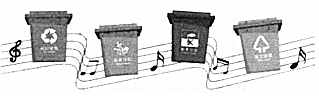
Recently, garbage sorting has been a popular topic. As one of the 46 Chinese cities chosen to require garbage sorting, Shenzhen recently took action to ask residents to throw away their garbage in designated places and then asked workers to watch the sorting process at fixed times and places.
In fact, in 2017, Shenzhen gave the country's first guidance (指导) on household garbage sorting. In the guidance, there are nine kinds of garbage. Ordinary household garbage has four types, that is, glass, metal, plastic and paper waste, food waste, dangerous waste and other waste. According to this sorting rule, it's not necessary for residents to distinguish (区分) between wet garbage and recyclable or dry garbage.
"Shenzhen residents know about the types of glass, metal, plastic and paper waste. However, they don't know much about the different types of food waste," said a staffer from Shenzhen Yuanchuang Environmental Technology Company. He added that some residents wrongly threw polluted paper and plastic take-away boxes into recycling bins for glass, metal, plastic and paper waste. In fact, they are considered "other waste". Residents shouldn't throw food waste away along with plastic bags. Also, they shouldn't put toothpicks and napkins into food waste bins.
One resident said that although her community hadn't begun garbage sorting, she supported it. She said, "I know dangerous waste and recyclable waste, but I will feel confused (困惑的) if the garbage is sorted too carefully."
At present, more than 2,700 government staffers are responsible for watching garbage sorting process. Shenzhen residents pay for garbage collection according to the amount of water used by each household now. However, in the future, they need to pay according to the number of garbage bags thrown out.
When did Shenzhen give the country's first guidance on household garbage sorting? ______
A. Two years ago.
B. Three years ago.
C. Four years ago.
D. Five years ago.
Where should people throw plastic takeaway boxes according to Paragraph 3? ______
A. In the bins of wet garbage.
B. In the bins of dry garbage.
C. In the bins of glass, metal, plastic and paper waste.
D. In the bins of other waste.
What does the resident mean by saying the underlined sentence? ______
A. She sorts garbage carefully in Shenzhen.
B. She doesn't know any kinds of garbage at present.
C. It's difficult for her to distinguish between some garbage.
D. She has no idea about when to sort garbage.
Why did the writer write the passage? ______
A. To encourage us to carry out garbage sorting all over the world.
B. To tell us something about garbage sorting in Shenzhen.
C. To tell us the reason why we should carry out garbage sorting.
D. To tell us the advantages of garbage sorting.
Recently, garbage sorting has been a popular topic. As one of the 46 Chinese cities chosen to require garbage sorting, Shenzhen recently took action to ask residents to throw away their garbage in designated places and then asked workers to watch the sorting process at fixed times and places.
In fact, in 2017, Shenzhen gave the country's first guidance (指导) on household garbage sorting. In the guidance, there are nine kinds of garbage. Ordinary household garbage has four types, that is, glass, metal, plastic and paper waste, food waste, dangerous waste and other waste. According to this sorting rule, it's not necessary for residents to distinguish (区分) between wet garbage and recyclable or dry garbage.
"Shenzhen residents know about the types of glass, metal, plastic and paper waste. However, they don't know much about the different types of food waste," said a staffer from Shenzhen Yuanchuang Environmental Technology Company. He added that some residents wrongly threw polluted paper and plastic take-away boxes into recycling bins for glass, metal, plastic and paper waste. In fact, they are considered "other waste". Residents shouldn't throw food waste away along with plastic bags. Also, they shouldn't put toothpicks and napkins into food waste bins.
One resident said that although her community hadn't begun garbage sorting, she supported it. She said, "I know dangerous waste and recyclable waste, but I will feel confused (困惑的) if the garbage is sorted too carefully."
At present, more than 2,700 government staffers are responsible for watching garbage sorting process. Shenzhen residents pay for garbage collection according to the amount of water used by each household now. However, in the future, they need to pay according to the number of garbage bags thrown out.
When did Shenzhen give the country's first guidance on household garbage sorting? ______
A. Two years ago.
B. Three years ago.
C. Four years ago.
D. Five years ago.
Where should people throw plastic takeaway boxes according to Paragraph 3? ______
A. In the bins of wet garbage.
B. In the bins of dry garbage.
C. In the bins of glass, metal, plastic and paper waste.
D. In the bins of other waste.
What does the resident mean by saying the underlined sentence? ______
A. She sorts garbage carefully in Shenzhen.
B. She doesn't know any kinds of garbage at present.
C. It's difficult for her to distinguish between some garbage.
D. She has no idea about when to sort garbage.
Why did the writer write the passage? ______
A. To encourage us to carry out garbage sorting all over the world.
B. To tell us something about garbage sorting in Shenzhen.
C. To tell us the reason why we should carry out garbage sorting.
D. To tell us the advantages of garbage sorting.
知识点:Unit 5 Action章节:Module 3 Leisure time